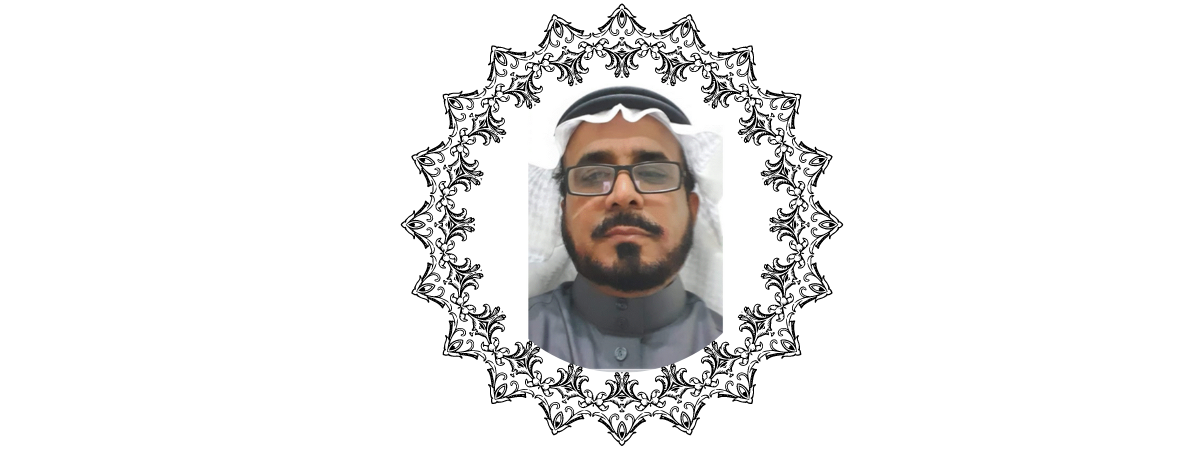
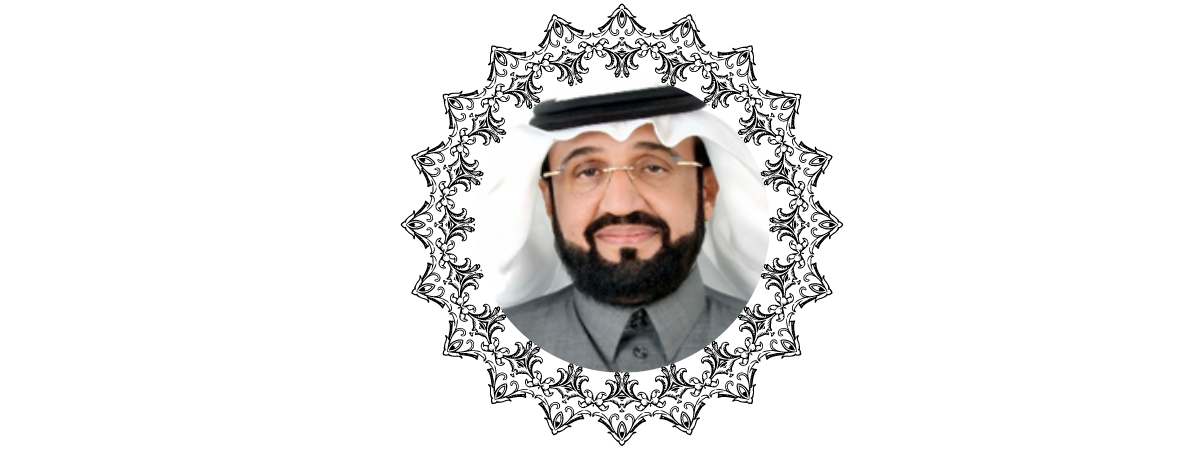
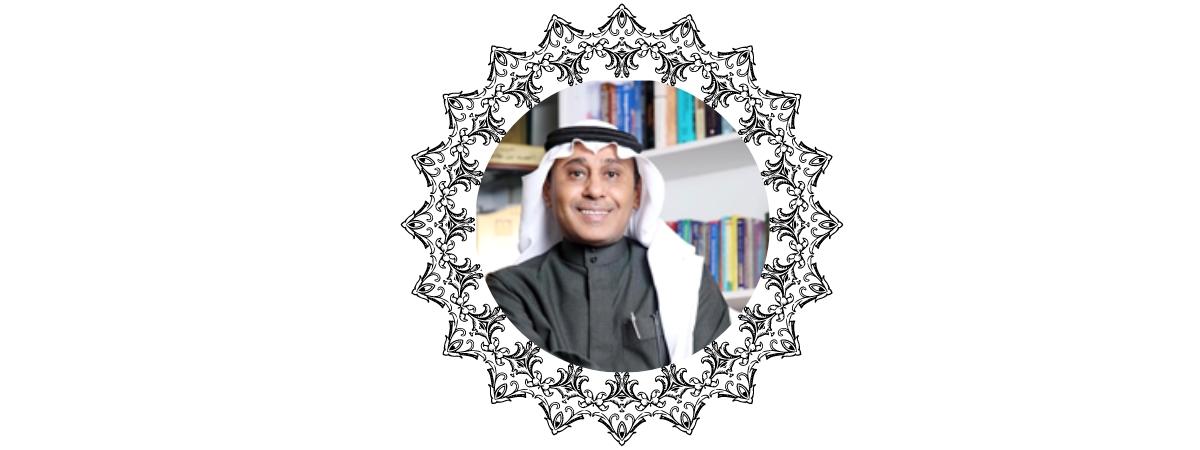
Professor Dr. Hamed Majdou AlQarni is a distinguished academic leader at King Khalid University, serving as the Vice President for Graduate Studies and Scientific Research. He has played a pivotal role in advancing the university’s research programs and academic initiatives through innovative strategies that have elevated the institution’s local and international standing.
قصص النجاح
Success Story
"Fellowship community has shown their endless support from the moment I applied to volunteer in Rwanda, giving me the confidence to go towards fulfilling my dream, knowing that there is an entire army supporting me every step of the way."
Kholoud Alali
Professor Dr. Abdullah Ghadran Al-Sehimi is the Advisor for Scientific Research to the President of King Khalid University, a Professor of Computational Organic Chemistry in the Department of Chemistry at King Khalid University, and a former member of the Shura Council (7th Session).
Professor Dr. Al-Sehimi is a distinguished academic and a national expert. He earned his Bachelor’s degree in Chemistry from King Saud University (1404 AH), followed by a Master’s degree in Physical Chemistry from King Abdulaziz University (1413 AH). He subsequently obtained a Master’s degree (1417 AH) and a PhD (1421 AH) in Physical Organic Chemistry from the University of Leicester in the United Kingdom.
He advanced through various academic ranks to become a Professor in the Department of Chemistry at the College of Science, King Khalid University (Abha). He has held numerous scientific and administrative positions, most notably: Dean of Scientific Research at King Khalid University; Director of the Research Center for Advanced Materials Science (RCAMS) at King Khalid University; Director of the Science and Technology Unit (affiliated with King Abdulaziz City for Science and Technology); and Dean of the College of Science at King Khalid University.
He has served on numerous committees, scientific councils, and professional associations—both Saudi and international—and has participated in a wide range of training courses, seminars, and conferences, both within the Kingdom and abroad.
He has published over 600 scientific papers in prestigious, high-impact-factor journals. Additionally, he has authored a series of books covering advanced materials science, solar energy, stereochemistry, computational chemistry, and electronic sensors—works that are widely cited by researchers across the globe. He has registered numerous patents with the US Patent Office, King Abdulaziz City for Science and Technology (KACST), and other institutions. His work spans fields such as solar energy, photodiodes, electronic sensors, nanomaterials, and flexible antennas, as well as a patent related to coronavirus research—achieved in collaboration with researchers from both within and outside the Kingdom. He won first place in the patents category of King Khalid University’s 2021 Scientific Research Awards. Currently, Professor Al-Sehemi is ranked among the top 2% of the world’s most-cited scientists, according to Stanford University’s classification.
He has supervised numerous graduate theses (Master’s and PhD) and conducts both experimental and theoretical (computational) research. His work focuses on advanced materials science applications, dye-sensitized organic solar cells, nanomaterials, stereochemistry, and drug design and discovery. His research involves designing and modeling new materials, simulating and predicting crystal structures—which are vital for developing high-efficiency photovoltaic cells—and studying Quantitative Structure-Activity Relationship (QSAR) models and their various applications.
Professor Al-Sehemi is known for his passion for knowledge and his commitment to staying abreast of the latest developments; he believes that progress begins where others have left off and that every new contribution can drive significant change and notable advancement. He is also recognized for his unwavering support of scientific research and innovation, driven by his conviction regarding the importance of research and its impact on the future of science and technology in the Kingdom.
Prof. Dr. Saad bin Abdulrahman Al-Amri’s career combines research excellence, academic leadership, and contributions to policymaking. He joined Saudi Arabia’s Shura Council in Rabi al-Awwal 1442 AH and contributed to its work in education and research through his membership of the Education and Scientific Research Committee.
He began his academic career at King Khalid University as a teaching assistant in 1421 AH. He subsequently pursued postgraduate studies in the United Kingdom, earning his master’s degree in 2003 and his PhD in biotechnology and environmental pollution from the University of Aberdeen in 2006.
He has held several academic and administrative positions, most notably Vice President for Graduate Studies and Scientific Research at King Khalid University from Safar 1439 AH to Rabi al-Awwal 1442 AH. His previous roles also include General Supervisor of the Scholarship Administration, Vice Dean of Admissions and Registration, and Head of the Biology Department.
His contributions extended to numerous councils and committees. He served as Secretary of the University Council, Chair of the Scientific Council, and Chair of the standing committees for International Cooperation, Teaching Assistants and Lecturers, and Scholarships. He also participated in scientific
Professor Abdulaziz bin Abdullah Al-Shahrani has combined scientific research with academic leadership and university infrastructure development. He earned his PhD in condensed matter physics, specializing in semiconductors, in the United Kingdom in 1414 AH. His contributions include research on crystals, thin films, and their applications in solar cells, alongside innovative techniques and equipment for materials research and fabrication. He has held leadership positions at King Khalid University, including Head of the Physics Department, Dean of Scientific Research, and Vice President for Projects. He also helped establish the colleges of engineering and computer science, develop their academic plans, and oversee the design and construction phases of the university campus at Al-Fara’a. His contributions extended to helping establish the Saudi Society for Physical Sciences and serving the community through awareness lectures on the effects of radiation on people and the environment.
Professor Ahmed bin Taher Ali Al-Mubarak, Professor of Inorganic Chemistry at King Khalid University, has built a career combining research excellence and academic leadership. He earned his PhD in catalysis from the University of Nottingham in 2000 and has held prominent positions, including Head of the Chemistry Department, Director of the Advanced Materials Research Center, Dean of Scientific Research, and Vice President for Graduate Studies and Scientific Research. His research contributions span catalysis and its industrial and environmental applications, including collaborations with SABIC and projects supported by King Abdulaziz City for Science and Technology. He has also supervised master’s and doctoral theses, contributed to a book on lanthanide chemistry, and supported research and innovation initiatives, recognizing their role in advancing knowledge and shaping the future of science and technology in Saudi Arabia.
Dr. Rahma Nasser Jreis Al-Qathanin, an Assistant Professor in the Department of Biology and Director of the Prince Sultan bin Abdulaziz Center for Environmental and Tourism Research and Studies at King Khalid University, has dedicated her scientific expertise to environmental protection and sustainability. She earned her PhD in plant diversity conservation strategies and taxonomy from the University of Reading, United Kingdom, in 2020. She has published more than 30 research papers and supervised master’s theses on sustainability and plant diversity. Her contributions include mountain forest rehabilitation, invasive plant control, and the conservation of ancient trees, alongside her participation in studies supporting the Saudi Green Initiative and her advisory work at the Center for Vegetation Cover Development and Combating Desertification. She has also promoted research collaboration and innovation in environmental and agricultural fields, recognizing their contribution to food security and community well-being.